

867
Shares




KATHMANDU,NEPAL: A Nepali youth delegate, Shambhavi Adhikari, has alleged that she faced distressing treatment at Delhi’s Indira Gandhi International Airport (IGIA) while travelling to Berlin to attend the World Health Summit, raising serious concern over how Nepali passport holders are treated during international transits.
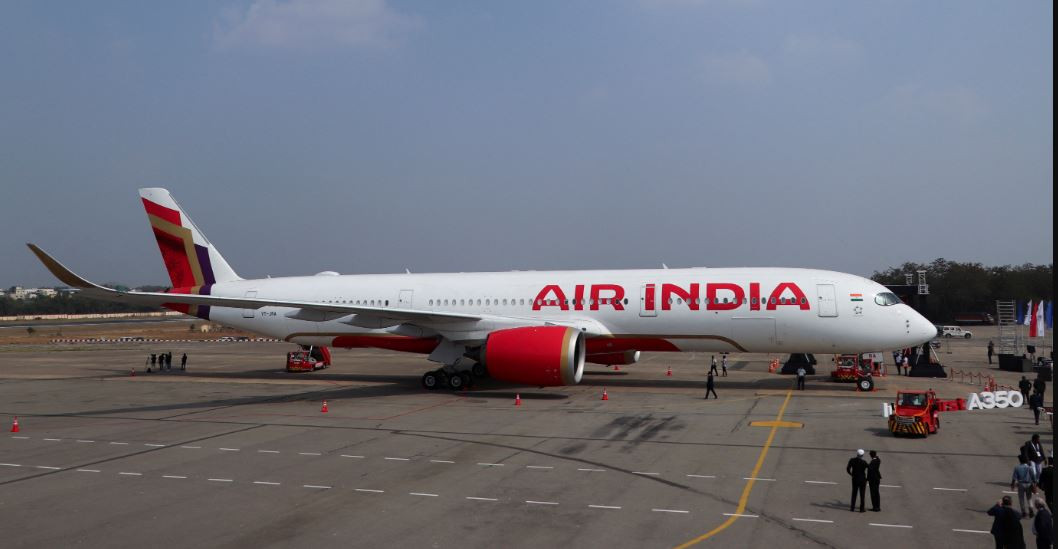
Adhikari was travelling from Kathmandu to Berlin via Delhi and Doha, having booked a ticket through Air India and Qatar Airways. She was scheduled to attend the global summit as a youth representative, carrying all required documents, including a valid German visa, invitation and sponsorship letters, confirmed tickets, and accommodation details.
According to her detailed account shared on social media, she was stopped during the transit process in Delhi, questioned about her travel purpose, and subjected to repeated interrogation. Despite showing all relevant documents, she was reportedly denied boarding for her onward flight and was held inside the airport for nearly eight hours without access to food, water, or her personal belongings.
She described the incident as humiliating and emotionally exhausting, stating that her boarding pass was torn and that she was made to feel as if her intentions for travel were suspicious. Adhikari further mentioned that she was not allowed to freely move around the terminal or even access the washroom during her detention period.
The situation left her stranded overnight, unable to contact her family or representatives. It was only after coordination with the Nepal Embassy and Nepal Airlines Corporation that she was able to return to Kathmandu. She later rebooked her journey through Doha and successfully reached Berlin, where she attended the World Health Summit without any issue from German authorities.
Her social media post quickly went viral, drawing widespread attention and sparking debate about the treatment of Nepali travelers abroad. Many users expressed solidarity, calling her experience a reflection of the challenges faced by citizens of smaller nations carrying less powerful passports.
India Denies Immigration Involvement
Following the growing online discussion, India’s Ministry of Home Affairs (MHA) issued an official clarification on Friday, stating that Indian immigration authorities had no role in the incident.
The ministry explained that Adhikari was in international transit and, as such, was not required to approach Indian Immigration. It clarified that the decision to deny onward boarding was taken by the airline, based on the validity of her visa for onward travel to Germany.
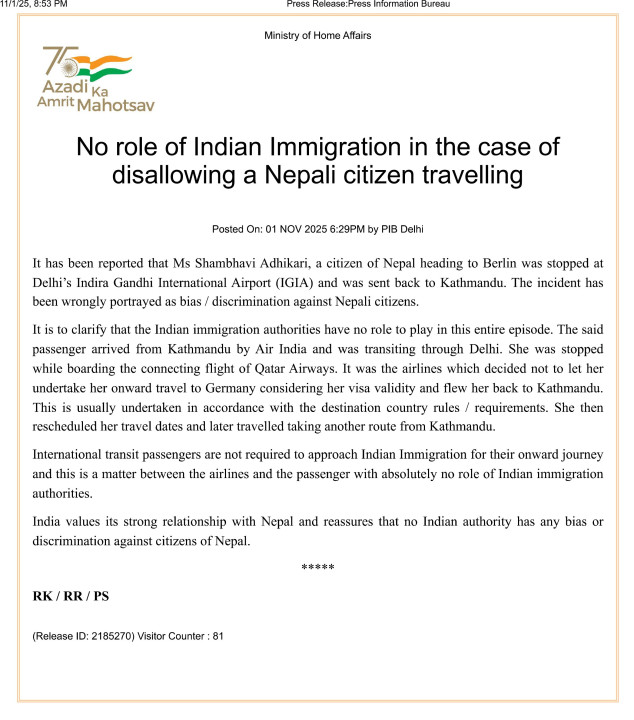
In its official statement, the MHA emphasized that international transit passengers are not processed through Indian Immigration and that such matters fall solely under the jurisdiction of the operating airlines and destination country regulations. It also reaffirmed that India values its close and historic relationship with Nepal and reiterated that no Indian authority has any bias or discrimination against Nepali citizens.
Aviation observers say the case highlights the importance of coordination between passengers, airlines, and authorities when travelling through international hubs like Delhi. They note that miscommunication or incomplete information on visa conditions often leads to confusion, particularly for travelers from developing countries using multiple-carrier routes.
The incident has reignited discussion on the limitations of the Nepali passport, which ranks among the lowest globally in terms of travel freedom. It has also prompted renewed calls for better diplomatic mechanisms to assist Nepali citizens facing challenges abroad.
For many Nepali travelers, Adhikari’s experience serves as a stark reminder of the emotional and logistical hurdles that can arise despite having valid documents. The episode underscores a deeper issue of perception — where nationality, rather than paperwork, can sometimes determine how a traveler is treated in global transit spaces.



From Facebook